A look at ai art and its repercussions
If you are an artist, you understand the long hours, creativity blocks, and painstaking editing that comes with creating a piece of art. But what if all your back pain (yes, I see you bad posture) and wrist cramps were replaced with the miraculous technologies of artificial intelligence?
As AI technologies continue to integrate into the corporate workplace – even becoming an expected skill set in some industries – conversations around what AI can do (or should do) are increasing as well.
While AI can be a helpful assistant, managing monotonous tasks and helping workers brainstorm ideas, concerns about AI and its capabilities arise when it starts to take on more creative roles. In this article from the Atlantic, research has found that there are some AI programs that have the ability to “mimic creativity,” which, as an artist, is concerning.
Illustrator and graphic novelist Deb JJ Lee was especially upset when they found out that their art had been used in an AI art generator. “This especially sucks because I’ve been spending a lot of years trying to figure out how to draw in a way that is completely my voice and I figured it out, and in a matter of months it became a bunch of zeros and ones,” they remarked in one of their TikTok videos describing the incident.
Non-artists may see AI technology as a fun new tool. Who wouldn’t be excited about the possibility of creating colourful and detailed artwork just by typing in a few words? But, as Lee expresses, there are real artists suffering the consequences of the AI art movement. Like all forms of AI technology, AI art relies on data sets – in this case, a collection of art made by human artists.
“Many have compared image generators to human artists seeking out inspiration… As long as my art is literally integrated into the system used to create the images, it is commercial use of my art without my consent” says digital artist @loisvb. Lois, like many artists who are concerned about the increasing popularity of AI art, has been using her platform to educate on and protest against the use of AI art.
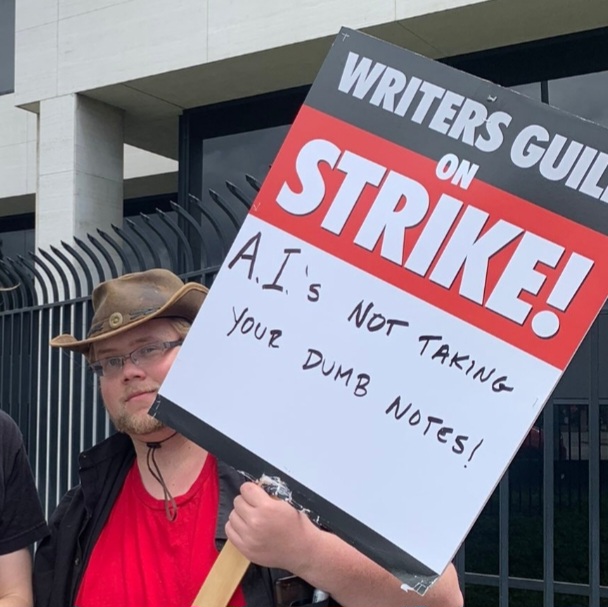
But visual artists are not the only types of artists affected by the popularity of artificial intelligence. In fact, the Writers Guild of America (WGA) and its members (including acclaimed novelist Neil Gaiman) are currently on strike as AI-generated scripts are being used in the film and television industry. Not only is the use of AI an ethical concern in these industries, but it could also mean that artists lose their jobs to machines.
A perhaps unexpected consequence of the popularity of AI art is that artists who use a style that resembles AI art are facing backlash in their own communities. In a TikTok video detailing how one artist was kicked off of the /art subreddit for art that looked like ai art, @hyperallergic notes that “it seems like its not only harder for these artists who work in the style to make a buck, but also that people might start looking at artists who make this type of work and not believe that their work is really theirs.”
For those of you that are artists and are reading this, best if you keep backup copies of your art process to ensure that you don’t fall victim to the “ai artist” accusation. The digital art app Procreate has a great tool that artists can use to see a timelapse of their art’s creation. While the tool was perhaps created initially as a way for artists to view and share their art process, it has turned into a form of insurance for artists who have their art’s originality questioned. Additionally, as there is always a risk that your art may end up in the digital hands of an AI art generator, it is best to keep evidence of your art process for copyright purposes as well.
So what now?
As the internet has evolved and become the main tool people use to search for information on issues ranging from general inquiries to bigger research problems, using physical information tools like encyclopedias or understanding the ins and outs of the Dewey Decimal System have fallen out of favour.
At the rate artificial intelligence capabilities are evolving, will creativity suffer the same fate? Or as artists can we persevere and maintain the space to do what we do best: create.
Leave your thoughts in the comments below! 🙂
Featured image: a protestor at the WGA strike holds a sign that reads “A.I.’s not taking your dumb notes!” Photo by Wikimedia Commons. Used with a CC by SA-4.0 International license.
 Bella Recca

Leave a comment